


There’s nothing like interviewing someone who has surfed through cancer to remind you of the privilege with which most of us move through these sports we love. I first saw Danielle Cass online because she started her surfing journey at 52 and was featured in several publications for that alone, partly because of a beautiful film she made about her journey.
And then about a year ago, I saw that these posts had shifted. The story was now something altogether more serious. Danielle had been diagnosed with aggressive breast cancer, and was choosing (*felt she had no choice) to surf through her chemo and recovery from surgery. And documenting her journey, inspiring and connecting with other women around the world who have chosen the same path.
October is when the US recognises breast cancer awareness month. Statistics show that 2.4 million women around the world are diagnosed with breast cancer each year; and yet 8.2million women are living with or beyond a breast cancer diagnosis (World Health Organisation). A guest post from Danielle interviewing some of the women she’s met through this journey felt timely.
This is the first Board Women newsletter in a while, but this is us back into a Monday rhythm now, so if you want to hear about all things midlife & reinventing the narrative of ageing through skating, surfing and snowboarding, please do stick around and subscribe.
Danielle Cass is a surfer who lives with her husband in Northern California, where they raised their 25-year-old son and 23-year-old daughter. She works at Microsoft on Responsible Artificial Intelligence education. When she was diagnosed with breast cancer in 2026, she partnered with surf photographer Matt Berridge (www.mattberridge.com / Instagram @a_greener_hue) to chronicle her surf through cancer journey on her Substack blog: Danielle Rides the Cancer Wave and Instagram page Danielle rides the cancer wave
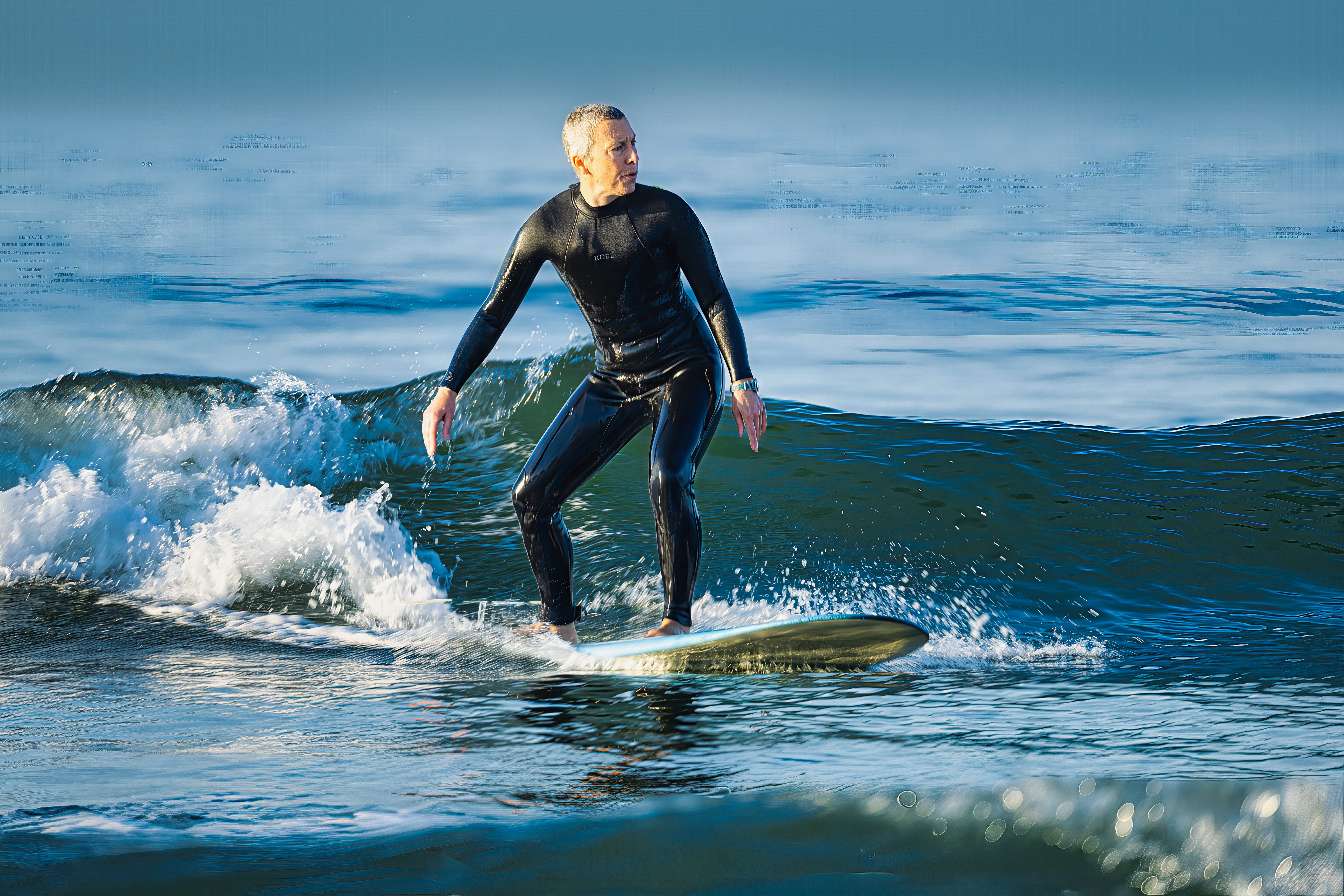
Guest Post by Danielle Cass
This blog post is a snapshot of five women surfers with cancer – spanning from Cornwall, UK to Oahu, Hawaii – who found strength and healing in the ocean during cancer. I met them by sharing my story online, first when searching for a role model on how to surf through cancer, then later when hoping to inspire others.
My (Danielle’s) Story
One year ago, a routine mammogram revealed I had aggressive breast cancer and needed a double mastectomy and lymph node removal surgery.
My first question to my surgeon was: “How soon after surgery can I surf?”
When I was told that 12 rounds of chemotherapy would follow my surgery, my first question to my oncologist was: “Can I surf during chemotherapy?”
I was willing to lose my breasts and hair to cancer. I was not willing to give up surfing.
I came to surfing late, as a 52-year-old facing menopause. I had long dreamed of becoming a surfer, but instead prioritized chasing an intense career in technology while raising two children.
When our kids left home for college – and my husband took up golfing on Sundays with his college buddies – I seized my chance. I took a surf lesson an hour from my home in California’s San Francisco Bay Area, and was immediately hooked. On the drive home from the beach that day, I bought a 4-millimeter wetsuit and booties, and started surfing several mornings a week.
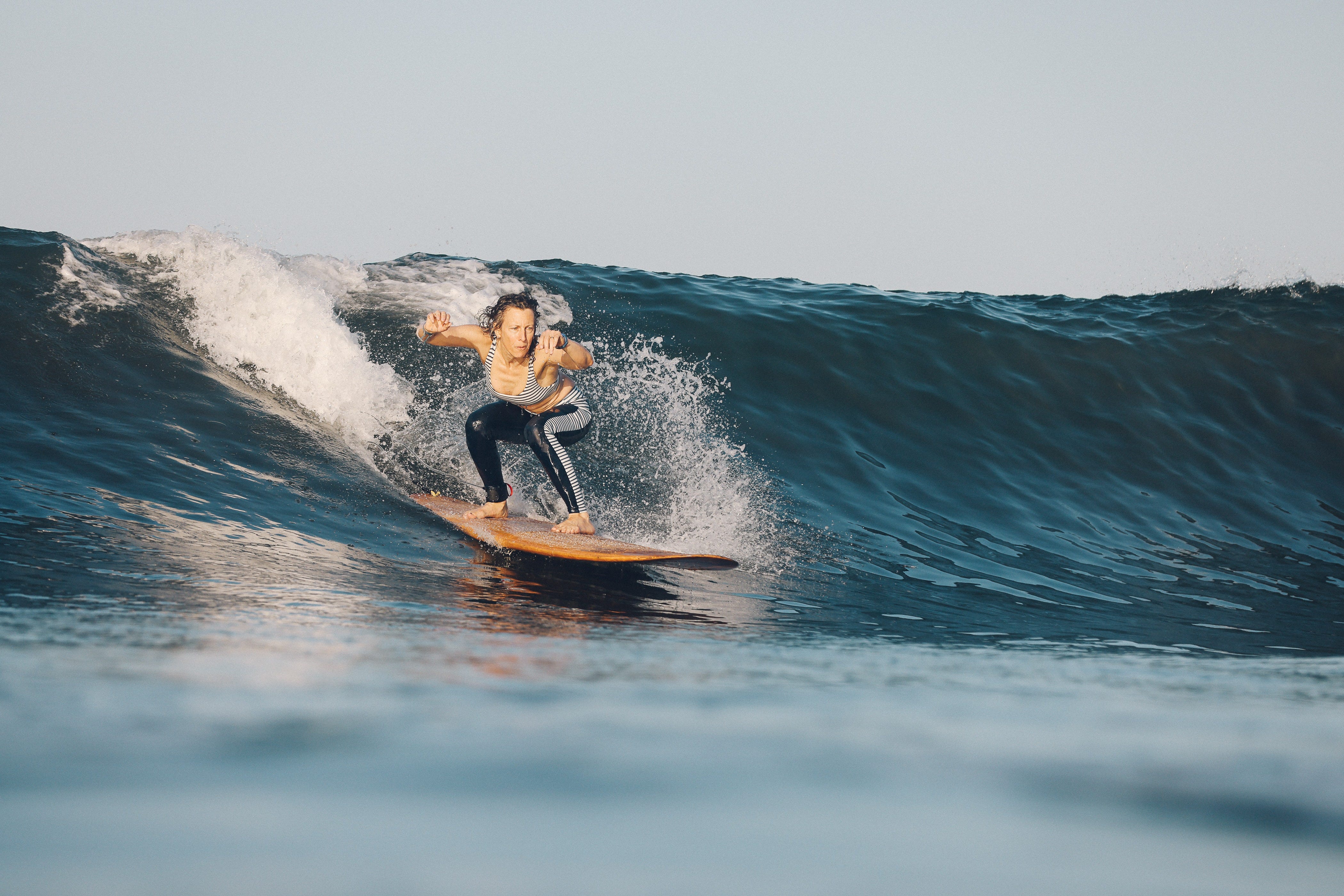
Because I didn’t want to surf alone, I started collecting friends: fellow women surfers I met in the parking lot and in the lineup. Over the next few years, these women became my tight-knit community of surf sisters. They range in age from 25 to 75.
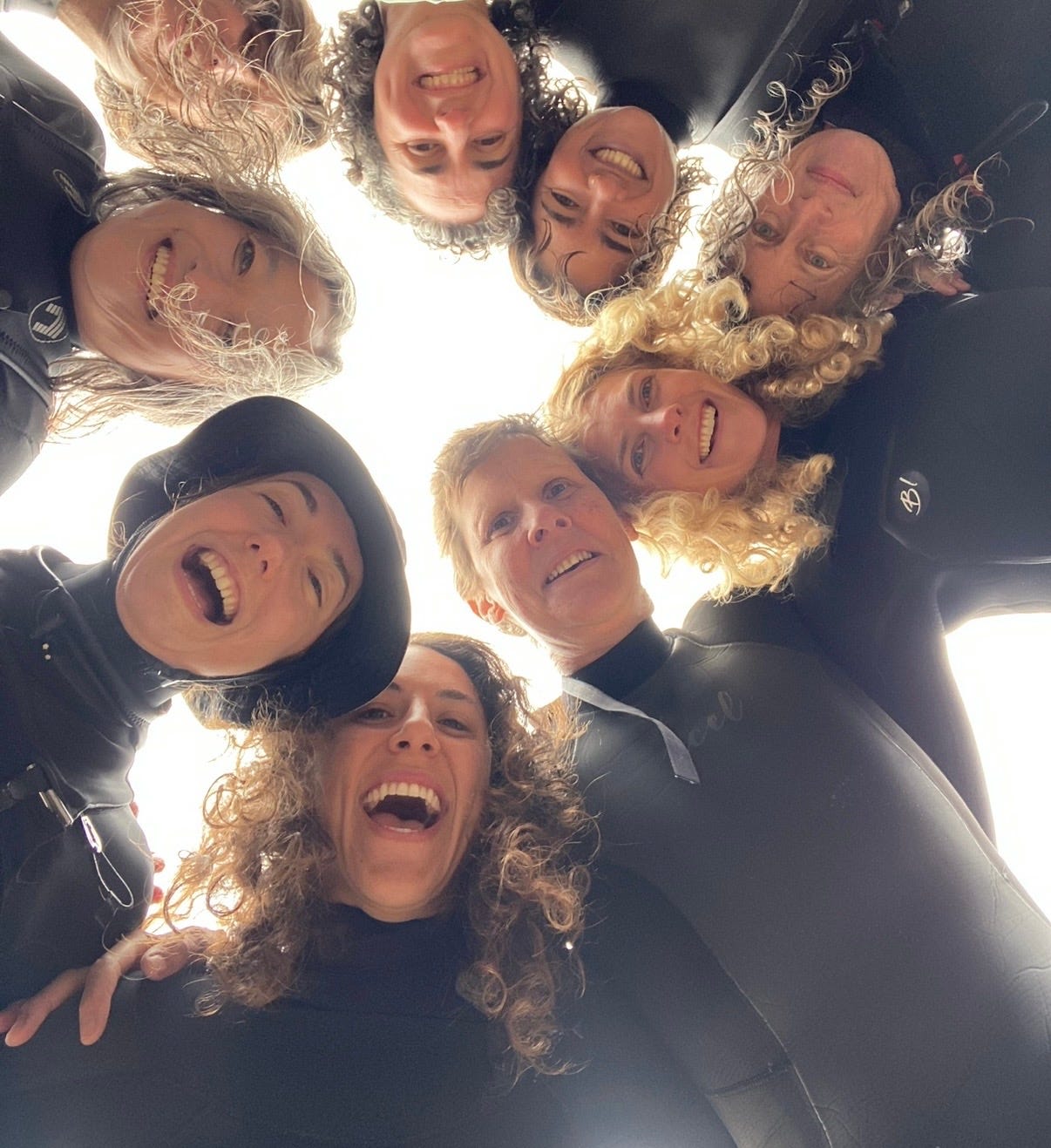
We surfed at dawn, at sunset, had weekend surf retreats and slumber parties.
I traveled with them on surf trips to San Diego and Santa Cruz, California, Sayulita, Mexico, and El Viejo, Nicaragua.
After decades of giving everything I had to those around me – my kids, husband, dog, parents, sisters, work colleagues – surfing was the one thing I did just for me.
It made me feel strong and beautiful. (Two adjectives that typically fade away for women when they hit menopause.)
It was such a powerful experience that I made a short film about learning to surf at 52 and the power of community. The film was shown at the San Diego Surf Festival in 2022.
So when I got hit with a breast cancer diagnosis a year ago, I was determined to surf through the whole experience. I would not let cancer take from me the empowerment and community I got from surfing.
Seeking guidance on how to surf through chemotherapy after a double mastectomy, I posted a message on the “Women Who Surf” Facebook group of 40,000 women surfers. “I just got diagnosed with breast cancer and am looking for other women surfers who surfed through chemo, and surfed after a double mastectomy,” I wrote.
Within 24 hours, more than 100 women surfers from around the world weighed in with advice from personal experience, and nearly 700 women reacted positively to my message. The majority of those who had gone through cancer chose not to surf during the surgery recovery or chemotherapy due to infection risk from weakened immune systems, limited mobility, fatigue, and weakness.
But there was one woman who stood out: Melanie Ezell in Oahu, Hawaii had surfed through the whole thing. She became my role model, inspiring me to paddle out as soon as I could. (More on Melanie’s story below!)
At my post-surgery 7-week follow-up, my plastic surgeon announced that my 18 inches of chest incisions were healed enough for me to get back in the ocean. I drove straight to the beach and paddled out with my longboard.
And I kept on surfing through 11 more rounds of chemotherapy.
I see now that surfing through a raw Northern California winter surrounded by my community of women surfers kept me strong, healthy, and sane through my cancer journey.
Surfing didn’t replace medicine. Surfing didn’t cure anything.
What it did was return something cancer steals fast: agency.
Every surf session was a small declaration to the universe and to myself: I am still here.
I chronicled the journey with blog posts on Substack, magazine articles, and photos and videos on Instagram and Facebook of me surfing bald because I wanted to inspire other women going through breast cancer.
I wanted women to know that although breast cancer can take your breasts and hair, it doesn’t have to take away your identity.
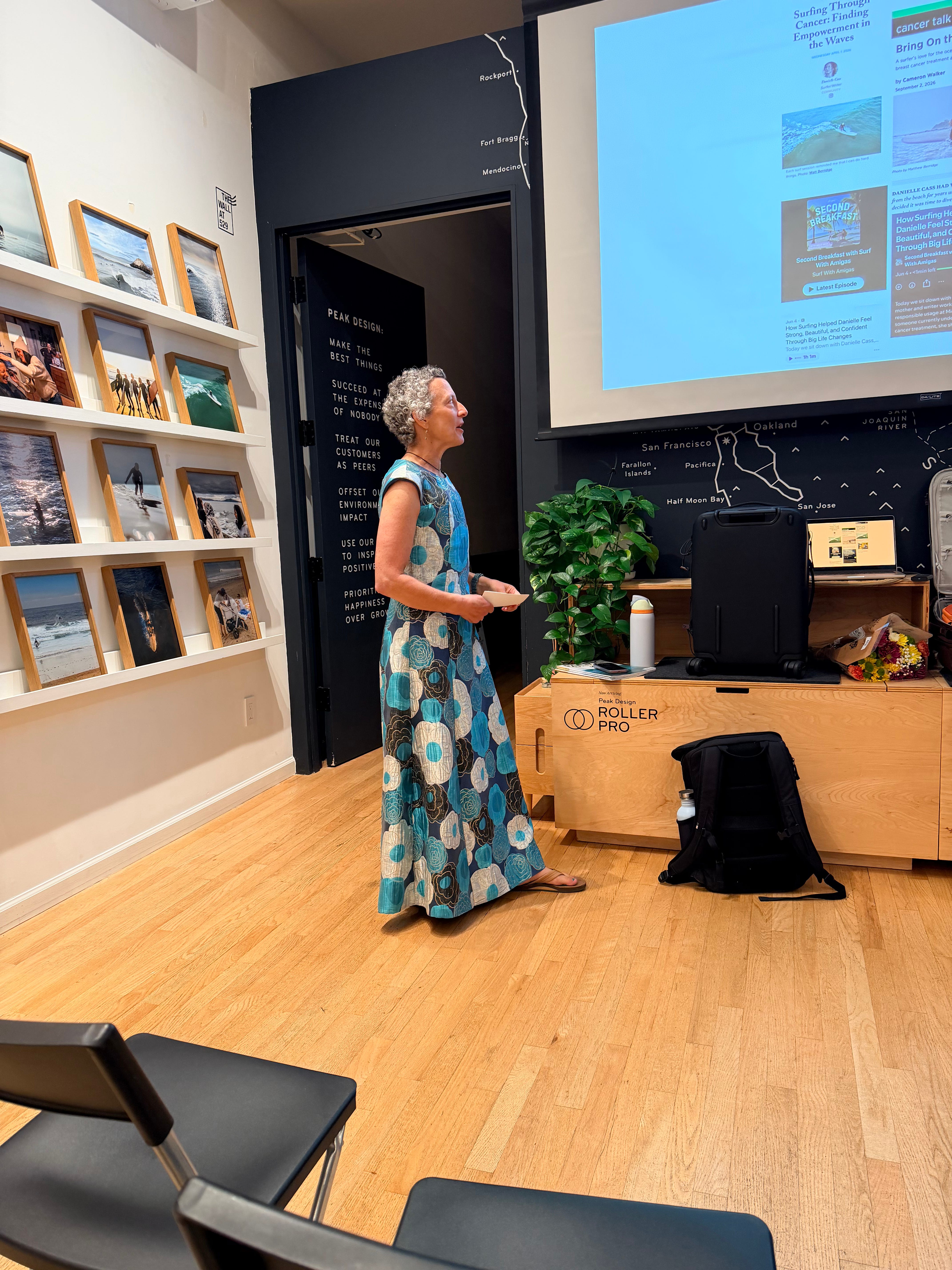
But my surfing through cancer experience isn’t just a personal anecdote of resilience. It points to a growing body of medical research demonstrating the immense physical and mental benefits of maintaining — or even starting — physical activity during cancer treatment.
You don’t have to be a surfer to gain these benefits.
My oncologist Dr. Eva Thomas from Kaiser Permanente Northern California preaches that even a short walk around the block once a day can help accelerate surgery recovery and offset the side effects of chemotherapy.
Melanie Ezell’s story is also a testament to the power of physical activity and being in the ocean during cancer.
She’s the 42-year-old big wave surfer, writer, and mother from Oahu, Hawaii whose resilience and surfing through cancer was the role model for me during my diagnosis, recovery and treatment.
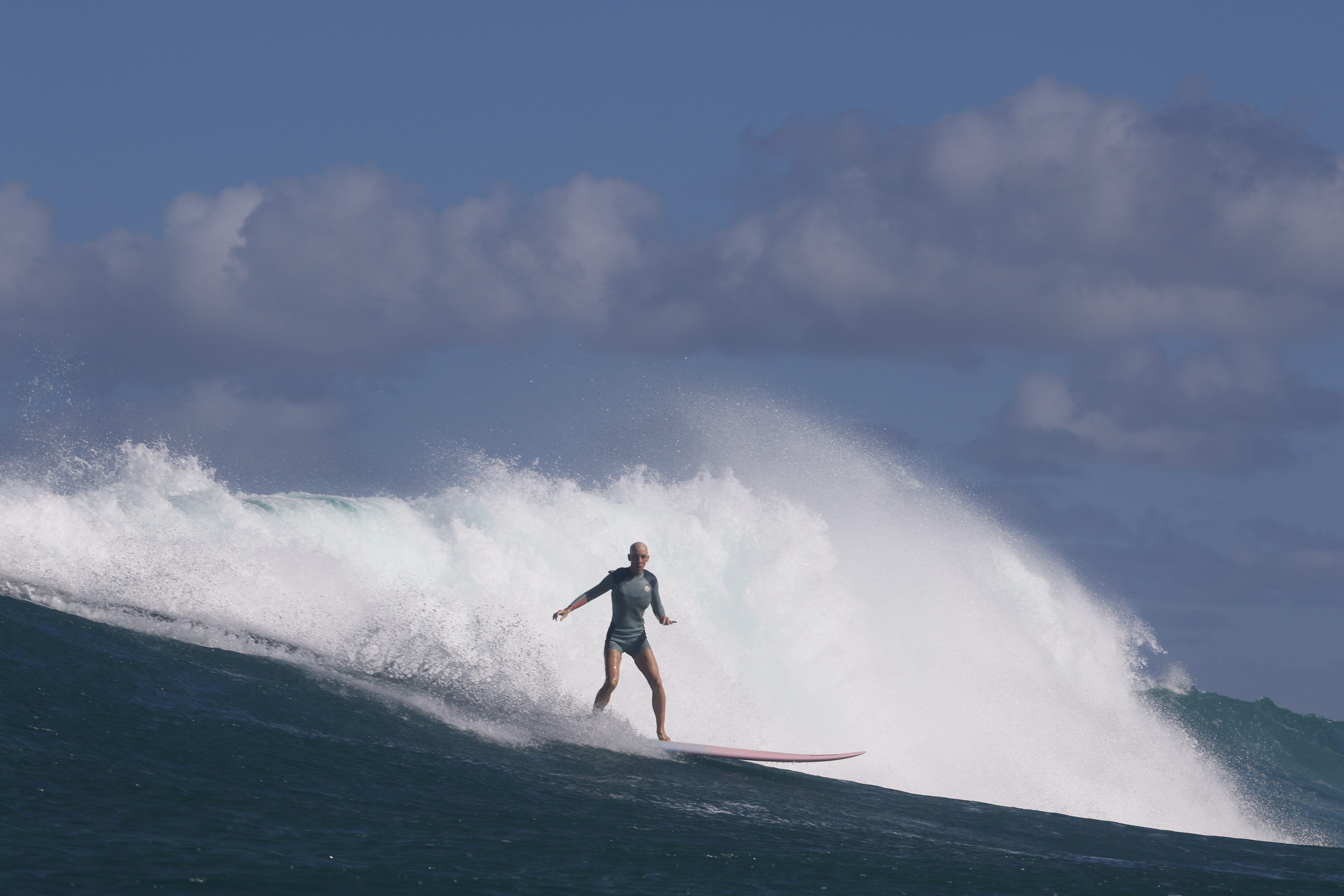
Melanie’s story
Melanie grew up in Michigan where she learned to surf on Lake Michigan in the era before you could easily order surf gear online. Without wetsuits or surfboard wax, she waxed her board with a candle.
Her serious relationship with surfing began at age 27 while living in San Diego for graduate school in mathematics at San Diego State University.
Surfing then became a pivotal outlet during a challenging chapter defined by divorce, an eating disorder, and a business failure.
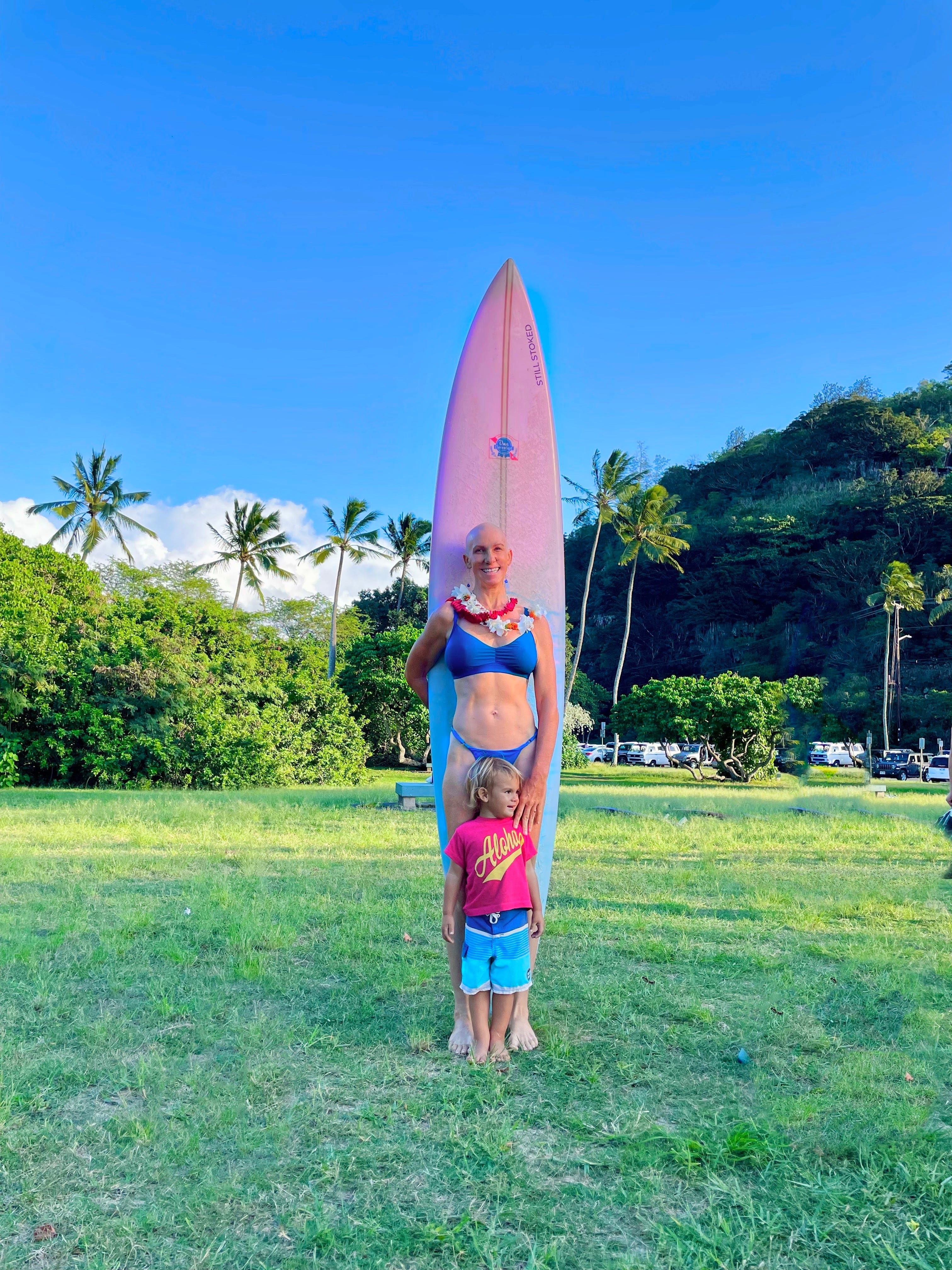
“I was like screw it, I’m going surfing,” she said. “I packed my boards, drove to Mexico, and spent three years bouncing between Mexico, Indonesia, and Hawaii. I was spending all my money, but having the best time of my life, and improving my surfing.”
After years of traveling and honing her surf skills, she decided it was time to set down roots and landed in Oahu, Hawaii in 2019.
On Oahu’s infamous North Shore, Melanie became a “wanna-be big wave surfer,” paddling out on heavy days with double-overhead waves. She once caught a wave whose face measured 25 feet tall.
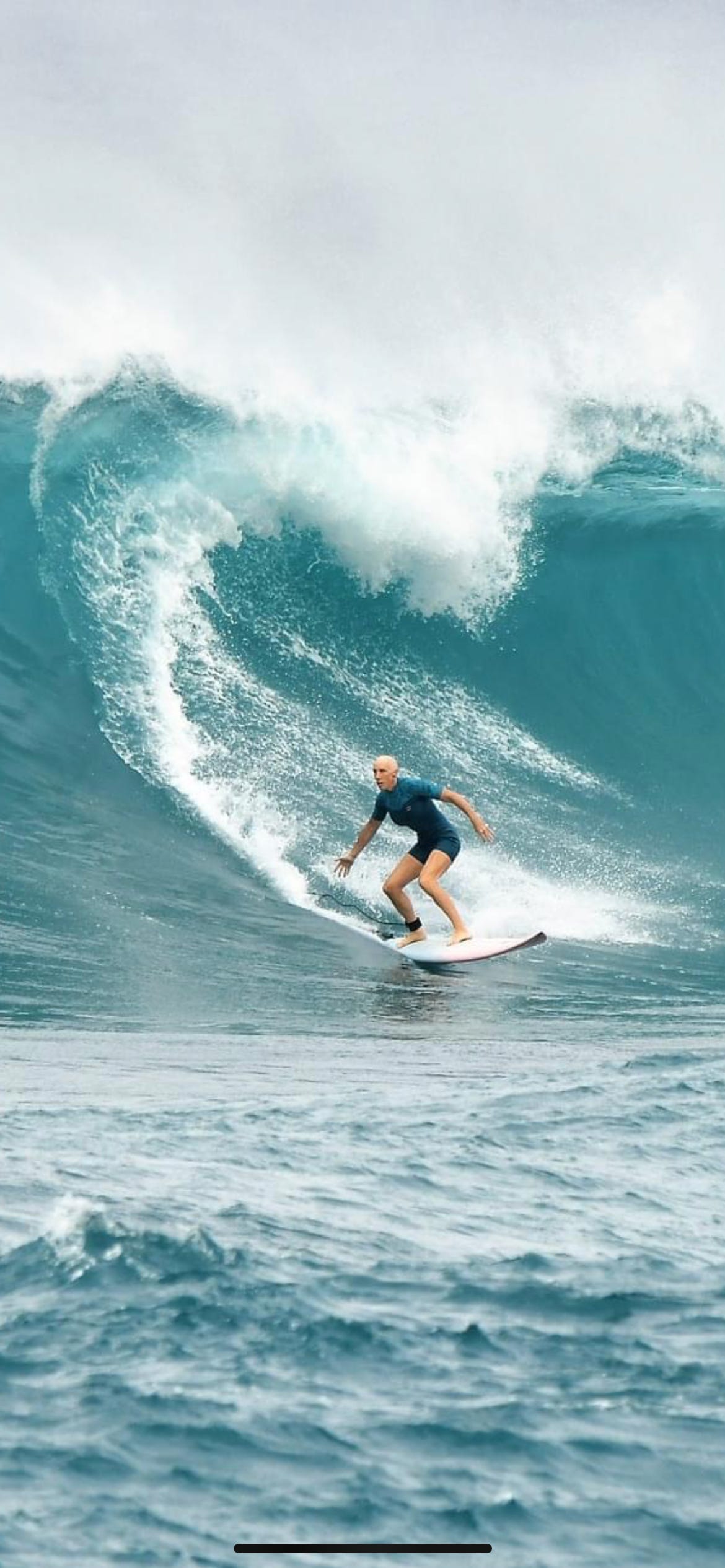
Carrying the BRCA1 gene mutation, Melanie was aware of her family history. Her grandmother died of breast cancer, her father’s sister had breast cancer, and her father tested positive for the mutation.
After she tested positive at age 30, Melanie began getting ovarian cancer screenings every six months, assuming she would eventually have a preventative double mastectomy in her late 40s or 50s. Ovarian cancer never crossed her mind, given the differing lifetime statistical risks.
At age 37, while traveling and surfing Central America across Panama, El Salvador, and Nicaragua with her partner and their two-year-old son, Melanie’s first symptoms surfaced.
Despite surfing constantly, she felt persistently unwell, experiencing a raspy cough and abdominal swelling. Initially suspecting long-term COVID-19 or a tropical parasite, her condition worsened until she experienced weight loss paired with a swollen stomach.
Curious about what ovarian cancer felt like, she searched the symptoms online and recognized that she matched all twelve listed. Upon returning from the trip, medical evaluations confirmed her diagnosis of stage four ovarian cancer.
When Melanie reflects now back on her mindset prior to diagnosis, she says: “I just never thought it would be me. I had been living a super healthy lifestyle. I thought cancer happens to people who drink diet soda and eat chicken wings. I didn’t take it very seriously.”
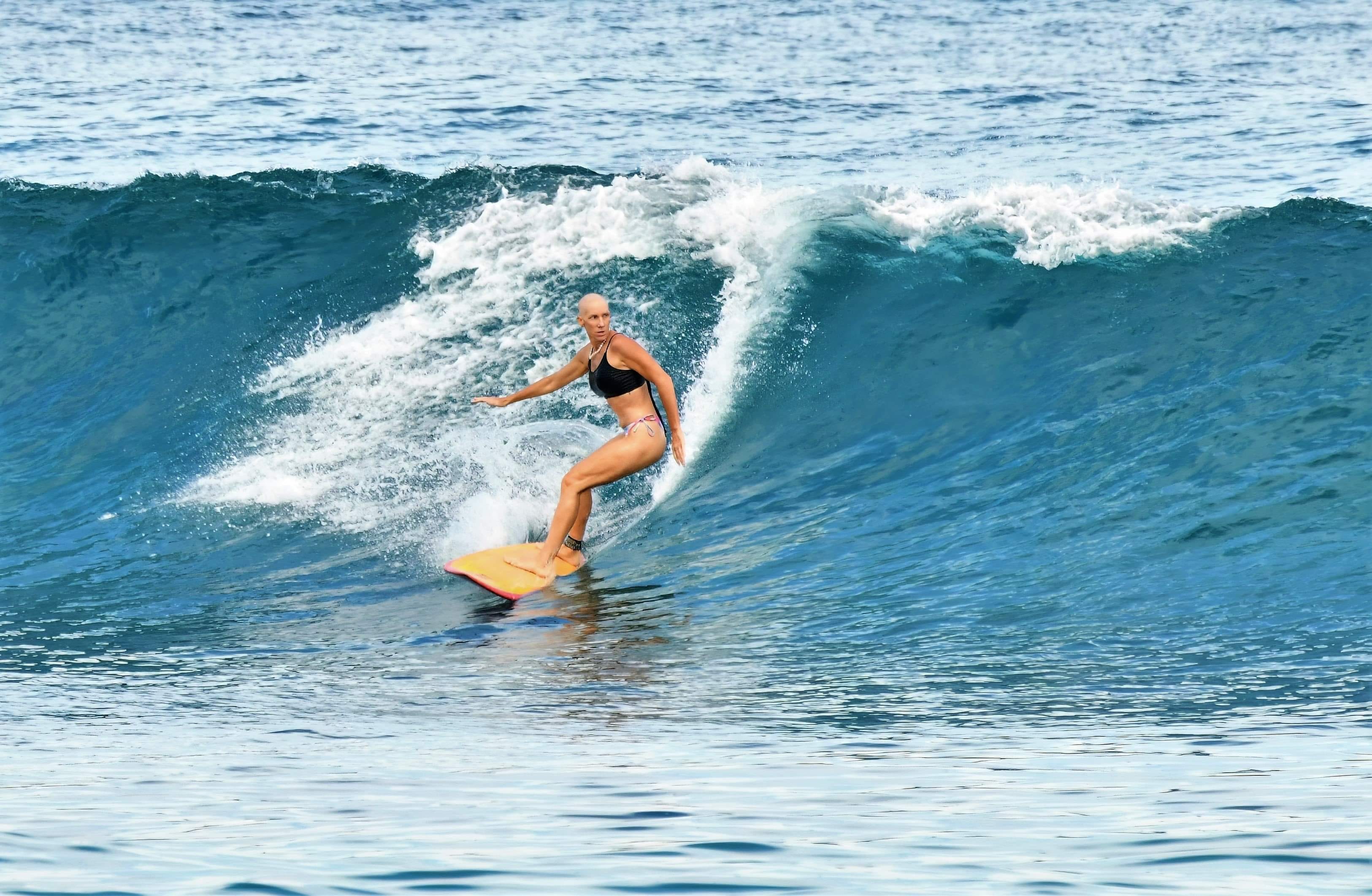
Melanie’s frontline treatment regime included four cycles of chemotherapy, major surgery, and four additional cycles of chemotherapy. Determined not to give up her identity, she surfed throughout the entire regimen except for the immediate post-surgery weeks.
Surfing gave her physical stamina and mental fortitude.
“Surfing helped me get through cancer treatment because it makes you realize you can handle shit,” she said.
During low-energy periods, she modified her approach to stay connected to the ocean: “Sometimes I would just paddle out and sit in the channel just to get my hair wet, move my body and drain the lymph out.”
When her cancer metastasized to her lungs, breathing the salt air while paddling provided direct physiological relief: “When you are surfing with your face a few inches above the water, there’s the salt mist coming up that made it easier for me to breathe when I got out.”
Surfing also gave her a mental break from feeling like a cancer patient.
“Surfing is a respite during cancer recovery and treatment. It’s a place where cancer has no meaning. You can just go and just be playful and move your body. That’s the best kind of medicine,” she said. “For me not surfing would be the same as just giving up.”
To process her journey and offer insight into living with a complex diagnosis, Melanie published a memoir Inherited: A Life Without a Cure. The book explores inheritance – of genetics, faith, grief, and resilience – and how illness strips away nonessentials to reveal what matters most.
Last month, Melanie relocated with her 6-year-old son from Oahu to Michigan to receive family support while undergoing her latest cancer treatment, continuing to find joy in water sports like wing foiling on Lake Michigan.
Now that Melanie is back in the Midwest and far from the ocean, she asked me to yell her name when I drop into a wave. Not only did I do that when I surfed this past week, I was also inspired by her to paddle into the biggest waves, leaving my fears behind me on the shore.
Lottie’s story
Lottie Bakewell is one of the women who reached out to me after reading my blog. She’s a surfer from Cornwall, UK and also going through chemotherapy for breast cancer.
Except she is 32, and has a 1-year-old son and 3-year-old daughter.
After reading my blogs on Substack, she sent me a message to say how much she enjoyed reading them because she too was surfing through breast cancer treatment.
“Finding your blog felt like a sign that I could keep paddling out,” she said.
Lottie is also chronicling her experience with a blog on Substack and videos and photos on Instagram. The photos, videos and blog posts capture a beautiful young mom with a beautiful family in a beautiful part of the world who is finding joy everyday amid the crushing, scary reality of cancer.
Lottie learned to surf in Cornwall at age 12 as part of a girls surf club through school. She and her girlfriends formed a “girls elite” surf crew, and then in her 20s lived in a house of surfer girlfriends. But now prefers to surf alone when she can sneak away. She loves the solitude and silence that surfing gives her.
“I love the peace when you paddle out. Those quiet moments on the water are where I catch my breath.”
She loves to be by herself, disconnected from her phone that’s always popping up with appointment reminders on her National Health Service app and calls from the doctor.
“No one can get hold of me. You don’t have to talk to anybody. I just love to be in the sea in silence,” she said. “Every time I have felt up to it (during chemotherapy), I’ve just gone surfing and I’ve not really considered the fact that I’m like a cancer patient.”
She discovered the lump in her breast while breastfeeding her then-10-month-old son. When she went in for the mammogram and they clamped her breast into the machine, breast milk squirted out and she and the technician laughed.
Lottie’s mother has been both a role model and a huge support because she went through breast cancer six years ago and remained very physically active throughout the experience too.
“She was always up and about when going through her breast cancer. She never stopped. Yeah, she didn’t succumb to it,” Lottie said of her mother’s rowing, hiking and cycling.
“And now I can say to her all of my stresses, worries and anxieties. And she’s like, ‘Yeah, I’ve been there. I understand this is really hard’,” Lottie said. “When I was first diagnosed, I would be up at three in the morning, freaking out on Google. And I could text my mum and she would text me back right away. Like she was just as awake and freaking out as I was.”
In following Lottie’s Substack blog and Instagram postings, I became fascinated with how she is living her life to the fullest without being cloistered away during months of chemotherapy. As Lottie puts it: “You have to keep living, even when the treatment feels like it’s taking over.”
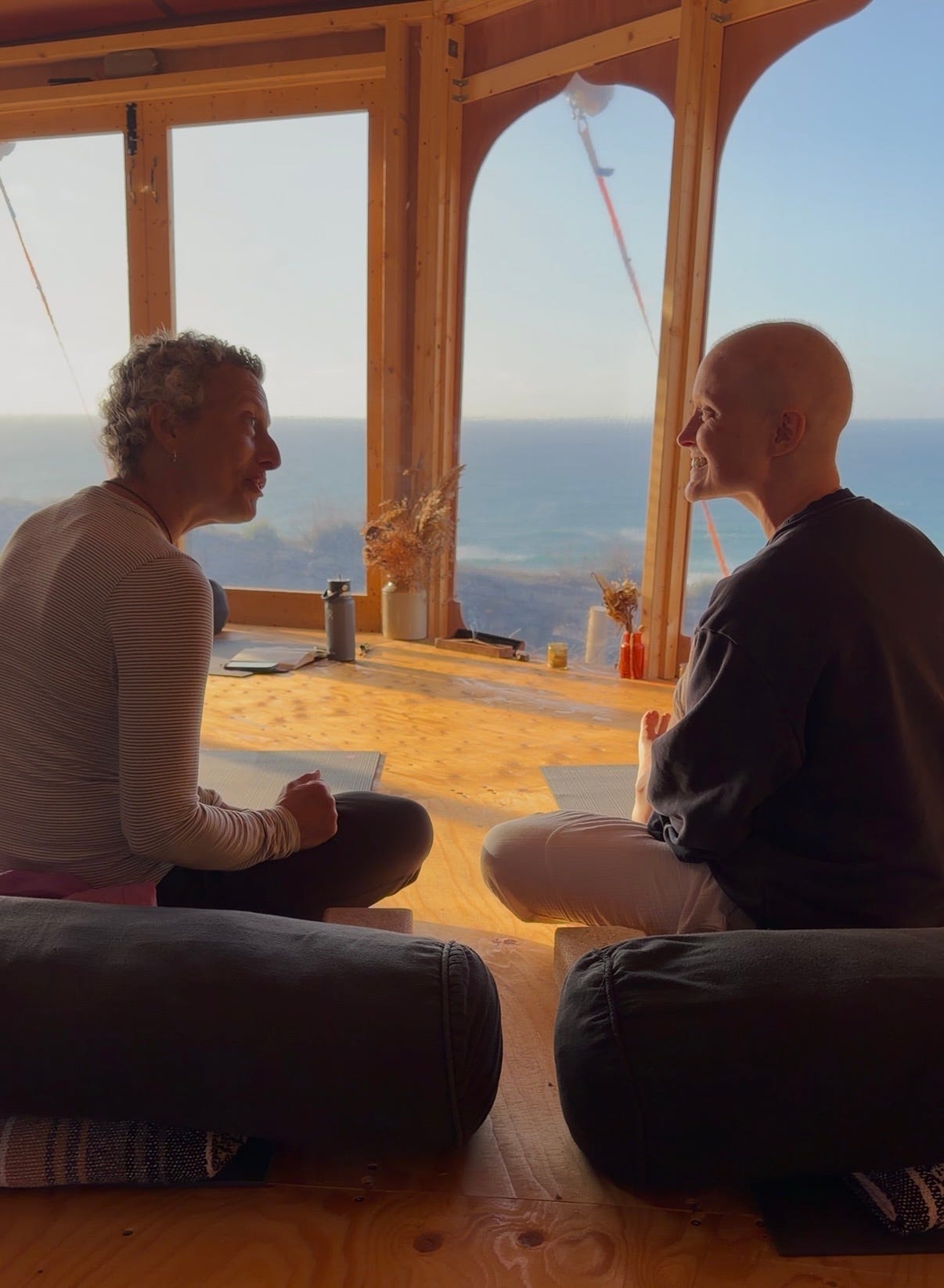
She goes to yoga classes (directly after chemo!) in a yurt overlooking the ocean, attends women’s sauna sessions on the beach, takes her kids to the ocean, goes out with girlfriends, has playdates with other moms and kids, takes her kids to forest school and the library, and harvests fruits and vegetables from her overflowing backyard garden.
“I didn’t want cancer to become my identity,” Lottie says. “It doesn’t have to take everything away from you.”
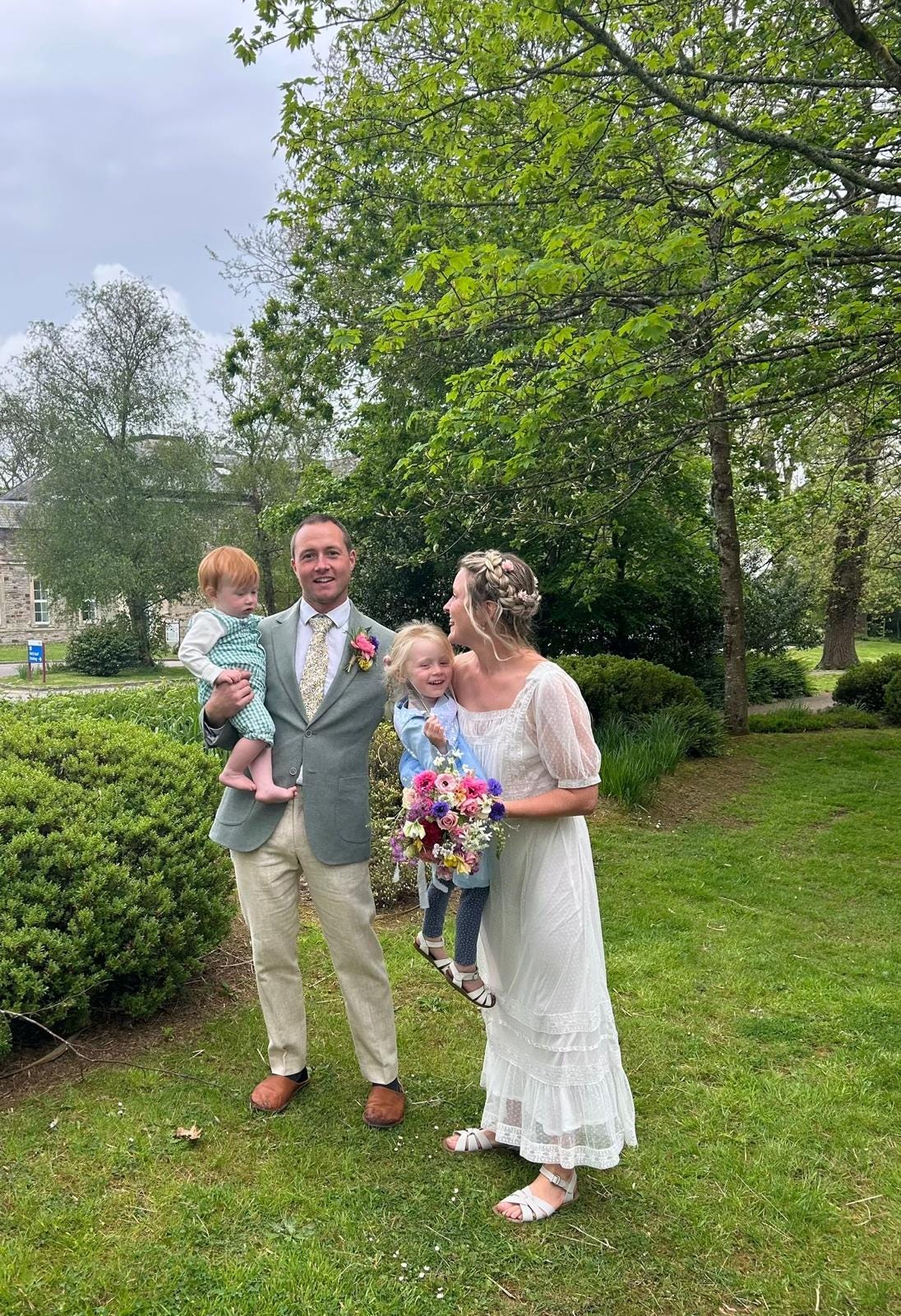
While waiting for her biopsy results in March to confirm whether she had breast cancer, Lottie kept herself distracted by organising her DIY wedding at the beach to finally marry her longtime partner and father of her two adorable kids.
After months of trading WhatsApp messages and a few video calls, Lottie and I met in person last month and went to a yoga class together when I was on a Cornwall hiking / surfing trip. It was a few days before her final chemotherapy session and I can attest to her incredible resilience and positivity.
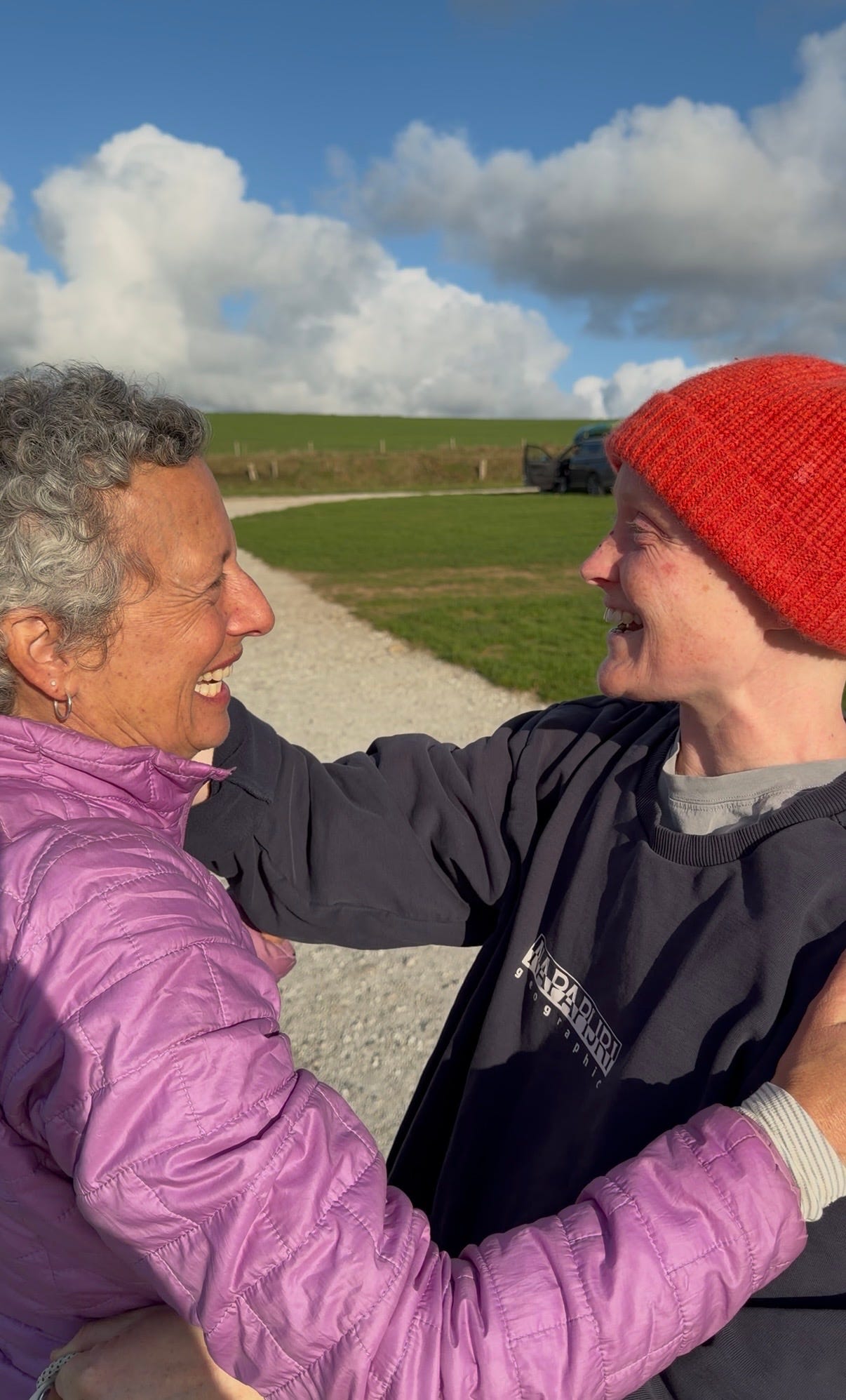
A few days later Lottie completed a 16-round course of chemotherapy. Her double mastectomy is next month – but Lottie is determined to keep savouring every day.
Ellen’s story
Ellen McLaughlin is another woman surfer I met through the Women Who Surf group on Facebook a year ago. We have had parallel journeys as she was going through chemotherapy a few months ahead of my treatment.
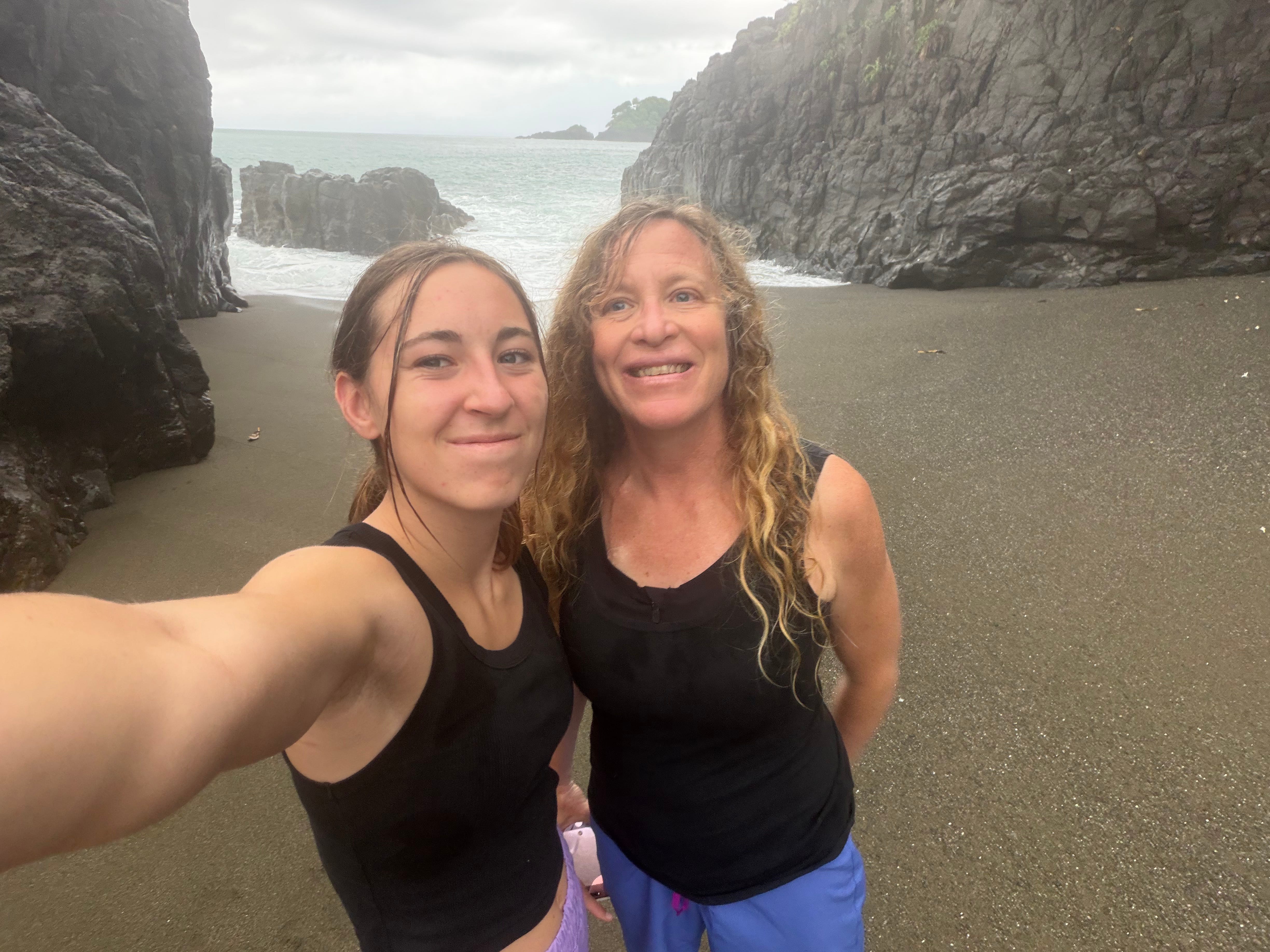
She’s a 54-year-old massage therapist in Humboldt County, California, where she has lived since 1989 and where she raised her daughter.
Surfing in Humboldt is not for the faint of heart. Ellen surfs year-round through punishing winter swells, stormy weather, and bitterly cold ocean temperatures that demand thick wetsuits and decades of ocean wisdom.
She learned to surf there at age 21 after finishing competitive university rowing, falling in love with the sport’s raw connection to nature as she and her girlfriends piled as many as eight surfboards onto the roof of her Volvo to chase waves together.
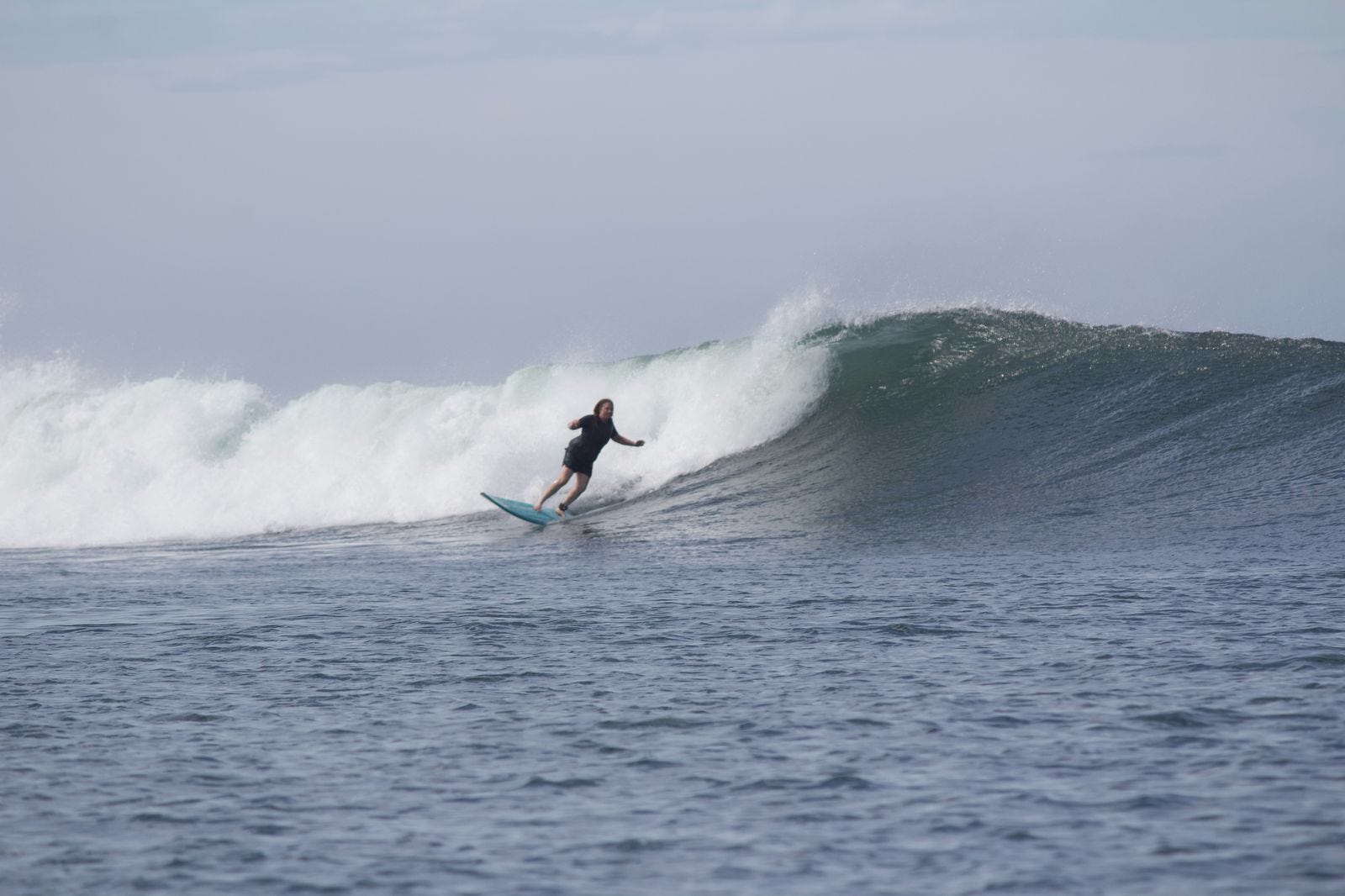
In May of last year, after experiencing symptoms for months and navigating an eight-month local healthcare delay to get a colonoscopy, Ellen was diagnosed with a four-centimetre rectal cancer tumour.
Determined to receive the best possible care, she switched insurance providers and traveled six hours away to Stanford University in the San Francisco Bay Area. Her intensive treatment plan began with 30 days of radiation and daily chemotherapy pills, followed by four grueling months of bi-weekly intravenous chemotherapy. When it concluded, her Stanford oncology team announced her as having a complete clinical response, allowing her to avoid invasive surgery while continuing vigilant monitoring every three months.
Throughout her cancer journey, surfing remained Ellen’s essential physical, spiritual, and social lifeline. Her local surf community rallied around her, hosting gatherings of support through every milestone and setback. On the morning of her first intravenous chemotherapy infusion, overwhelmed by dread, Ellen chose to paddle out into the ocean first. The surf session transformed her mindset so completely that she didn’t need the anti-anxiety medication her doctor had prescribed for the appointment.
Maintaining that connection wasn’t easy. Chemotherapy side effects — particularly severe fatigue and cold-induced numbness in her hands triggered by Humboldt’s icy waters — forced her to step away from surfing during November and December. When she returned to the water in January, she adapted by shifting from a shortboard to a more mellow longboard. To escape the Northern California cold, she traveled on warm-water surf trips to Panama with her daughter and to Southern California, finding relief and joy in warm water and gentle surf conditions.
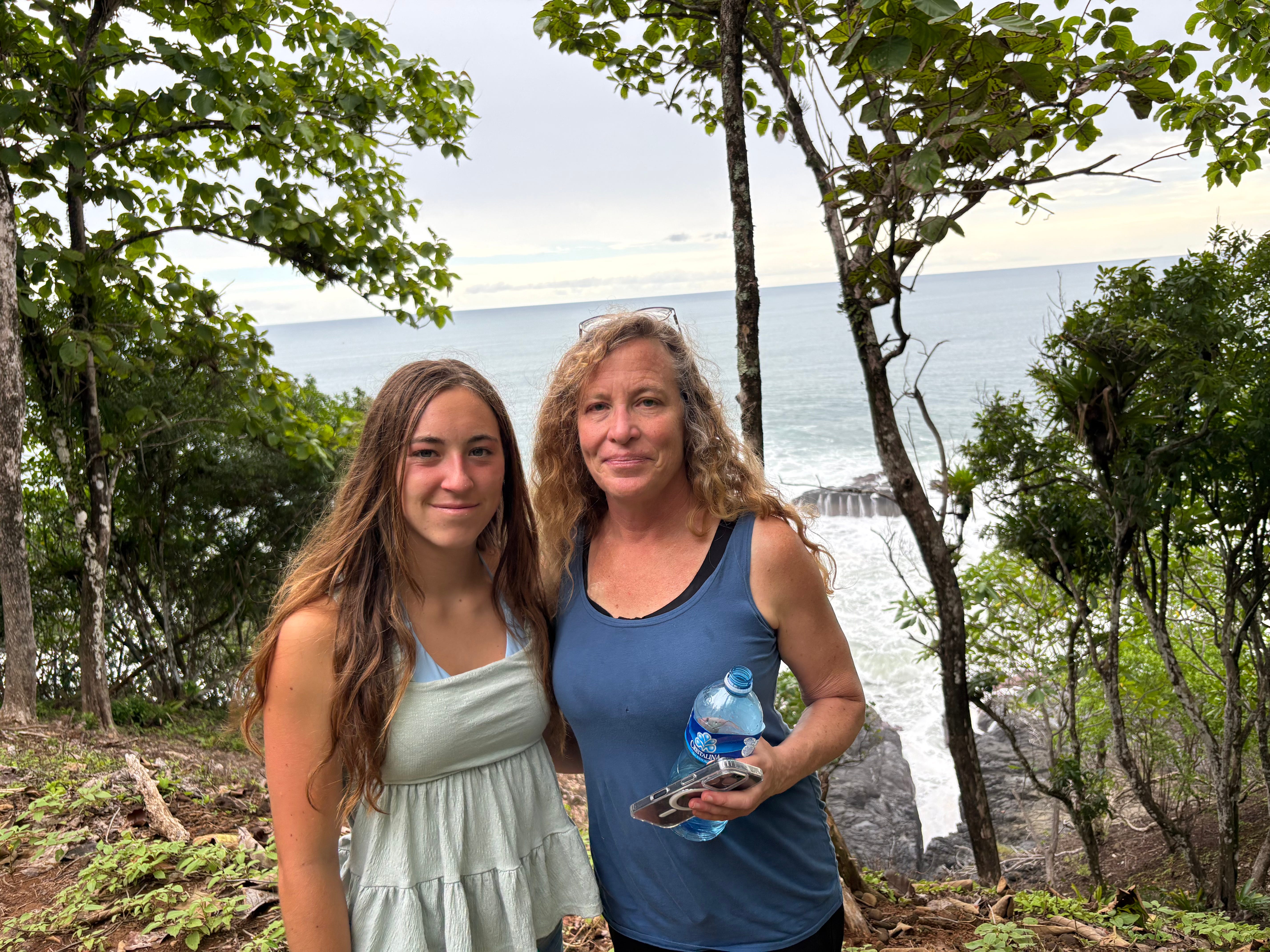
Ellen says she got immense comfort from reading during long treatment days — cancer memoirs and even discovering my writing on Substack and in Pacific Longboarder magazine. These pieces reminded her she wasn’t alone in her fight. For Ellen, surfing keeps her sane: offering a sacred space where the heavy weight of a cancer diagnosis temporarily vanishes, letting her feel whole, normal, and alive again inside her body.
When Ellen reflects back on how cancer has affected her, she says that her relationship with surfing has changed.
“I’m so grateful just to be able to go out. Even in non-optimal conditions that I might have passed on before my diagnosis, now I am just so happy to be able to get in the water”.
Caroline’s Story
The daisy chain of sharing inspiration to surf through cancer continues.
Two weeks ago, when I published a Facebook post about my Surfing Through Cancer photo exhibit and lecture in San Francisco, Caroline Wilhelm reached out to me.
She’s a 55-year-old Los Angeles surfer and mom with a high-powered career who was reeling from a new diagnosis of stage 2a breast cancer. She was looking for guidance on how to surf through her experience.
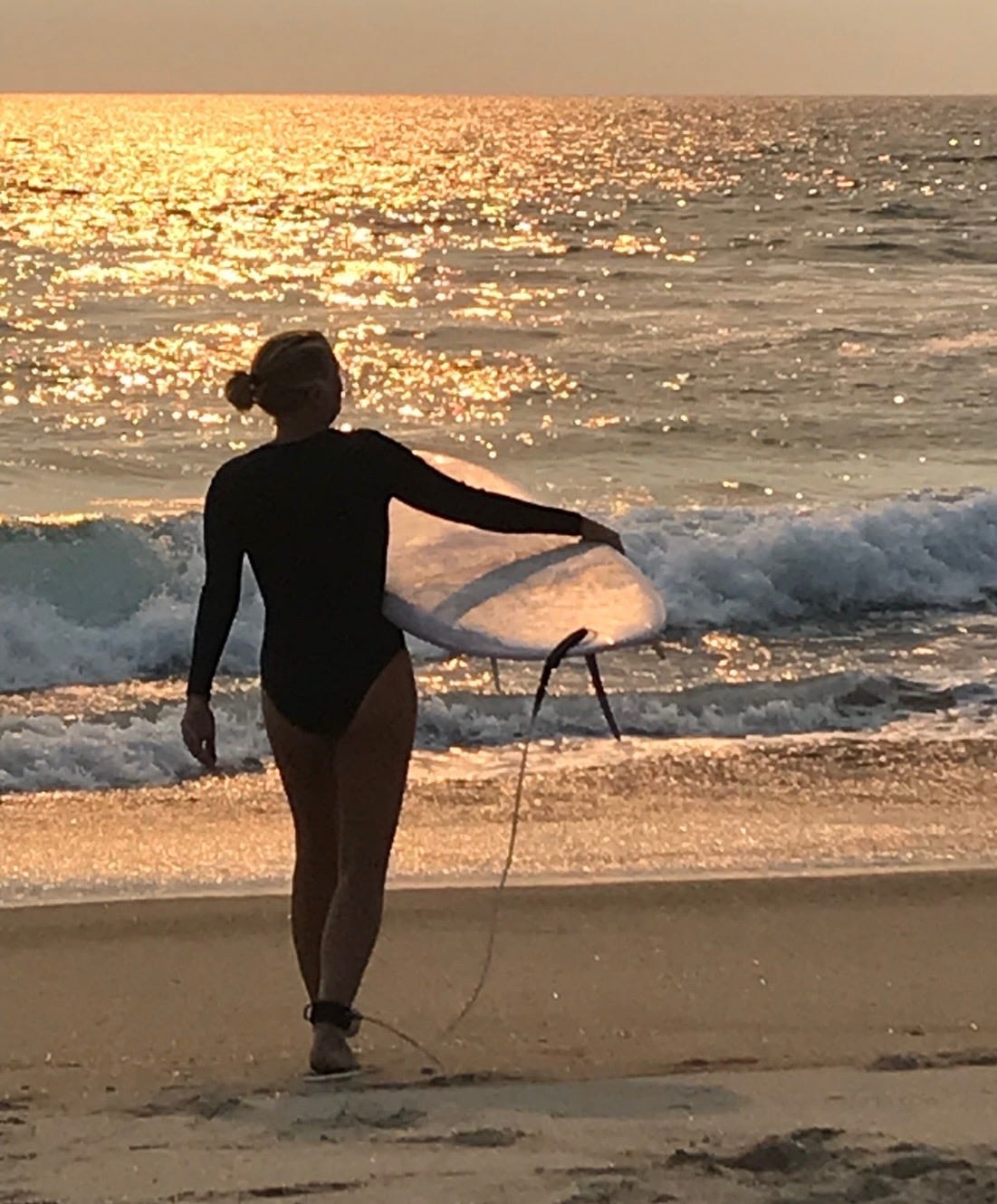
Like me, she learned to surf in midlife, and developed a tight community of women surfers with whom she travels to Central America on surf trips.
She has also competed in surf competitions alongside her 23-year-old daughter.
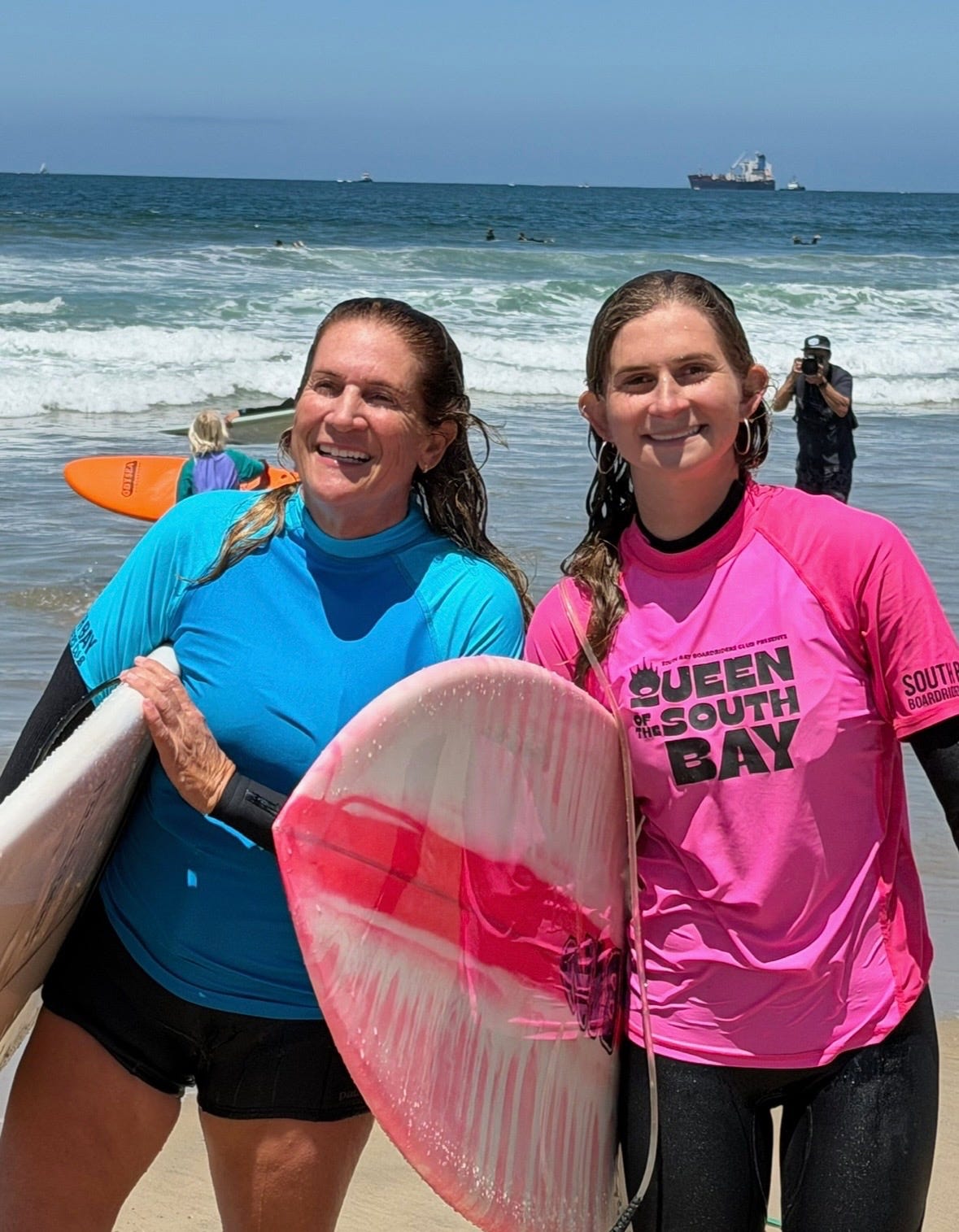
After Caroline and I had a long phone chat, she waded through all my Substacks and Instagram videos, and now is resolved to surf “her brains out” every day until her double mastectomy later this month, then go flat like me. (Going flat is aesthetic flat closure rather than getting breast reconstruction.)
Her goal is to be done with her recovery and in top surf strength for her annual surf trip to Central America with her girlfriends in 2027.
“Excited to move forward and get this over with. I hope that we can surf together one day,” she wrote me after reading all my posts.
Thank you so much to Danielle for our guest post this week, and to the inspirational women who agreed to be part of the piece. Danielle’s podcast episode will be live on Wednesday 21st October; and later this month we will be joined by Danielle, Melanie, Lottie, Ellen and Caroline in a live online panel to talk about their experiences.
We hope it’s a reminder to everyone out there to go and get checked; or that if they are going through treatment, these women have a hopeful message for them.
Thankyou so much for reading
Caroline x
Board Women Founder
P.S Normal service resumes next week on the newsletter - a healthy dose of all things midlife, some surf, skate and snowboarding inspiration, and things to read / listen / go to that will bring more adventure to your life. Hope to see you there x