


Bloody hell, I can’t actually believe the 50th episode has just gone out. It feels like one of those weird time vortex’s: so many episodes have now gone past, and yet it still feels like the podcast started yesterday.

In reality, I was never even intending to start a podcast. I had discovered skateboarding at the age of 45 (amidst some serious peri-menopausal, ‘blow up your life’ kind of turmoil), and realised quickly none of my friends wanted to join me on this new journey. Most of my mates don’t surf or snowboard either, and it felt like time to rectify that.
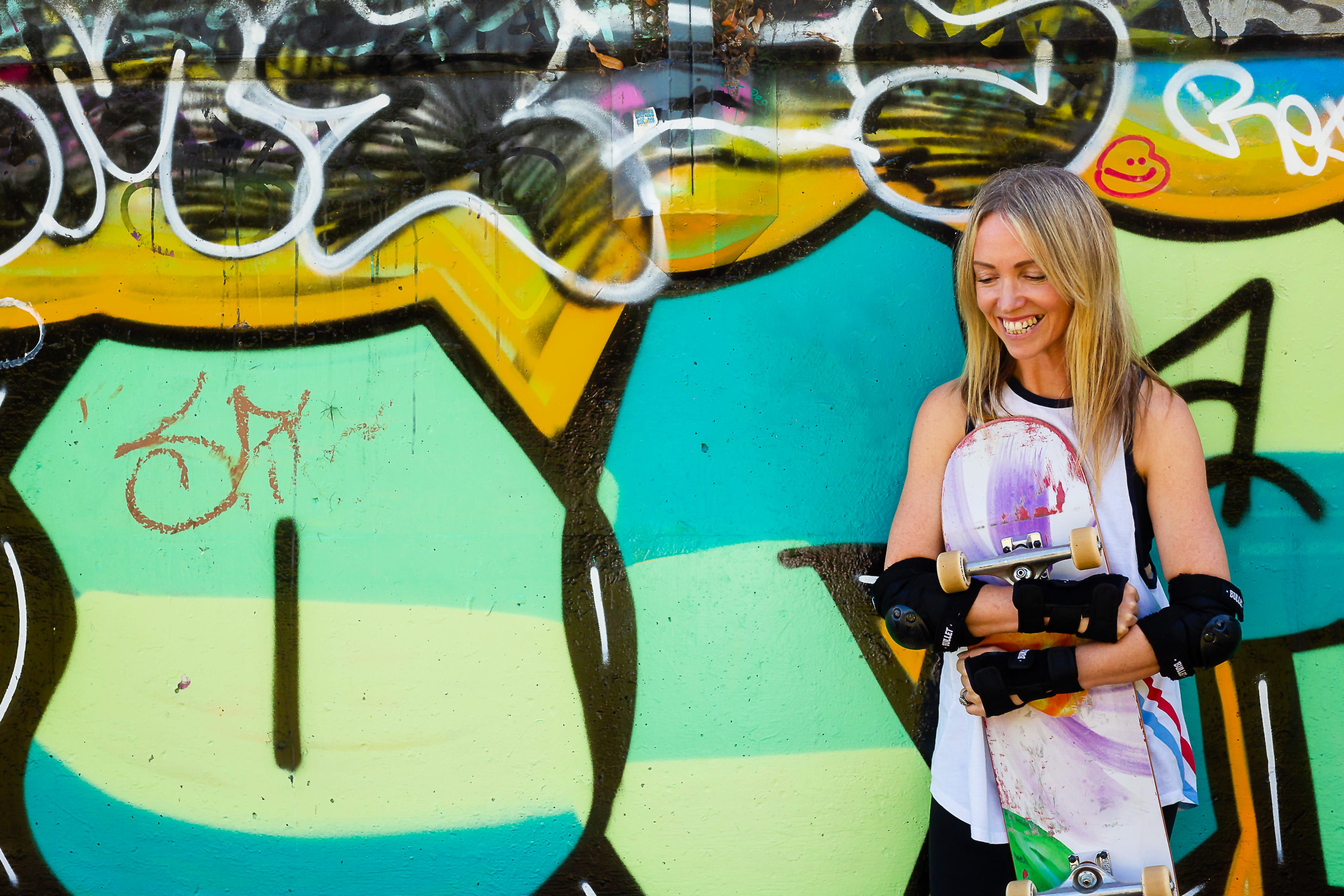
And so the idea for Board Women was born. Not a podcast. A way to bring together women who wanted to try these sports, and to have a crew to support them as they fell, and got back up again. A pretty selfish pursuit in reality, I needed skate mates.
I run my own business day to day (a business and marketing consultancy called LOOK UP), I have two small kids, and very little time. And yet, this idea of Board Women kept niggling at me, and to bring it to life I thought I needed some help, and I explored someone coming on board to help me with the social media side of things. In reality that never worked out (turns out talking to the community you are building first hand is actually the secret sauce, and social media is the way to do that at scale), but in the process of finding a social media ‘do-er’, someone mentioned the idea of starting a podcast.
I knew, literally, nothing. I didn’t even really listen to podcasts. This was three years ago, and they’ve blown up completely since then, but they were still something that were the preserve of certain people I knew, but by no means utterly mainstream. I spoke to some people. Did some research. Got a brand done with a creative I knew. Found my fantastic producer, Selma Chalabi, who was ex BBC radio, and actually was kind of a podcast newbie too, but we learned together, and the sound has always been awesome.
It’s been a steep learning curve, to say the very least. At times (mostly when I sit down again in the evening, like I am now, realising that I have what could be a full-time jobs worth of stuff to crack after my kids are in bed) I’ve felt like throwing in the towel, wondering if it will ever become something that pays, or that is influential in any way.
And yet, it keeps growing. I go to new skateparks or surf spots, and people have heard of it. Guests quickly agree to come on. It’s gaining traction, and at meet ups there are genuine fan girls (and sometimes guys, which I didn’t expect).
Who knew?
So, as I come up to launching the 51st episode, I thought I’d delve deep and give you my top 5 learnings after 50 episodes. There’s actually probably 100’s of learnings I could give you, so if this post is popular, maybe I’ll follow it up with a 50 after 50. Let me know. If you’re starting out in this arena, or you’re just curious, maybe you’ll find it helpful. Enjoy.
(1) You will hate your voice, get over it
The first episode I listened to was one of the most cringe-inducing experiences I’ve ever had. You can’t escape this inherent feeling of ‘I sound like a news reading wanker’, particularly for the intro sections where you’re talking to yourself. The first sentence of every episode is the hardest at the start, and even now I feel like my voice during the interview is how I actually sound, but the start is slightly higher pitched, slightly more ‘I’m on the radio, look at me’, and I find it hard to listen to.
I have managed to get over this a bit, and I try to listen back to my episodes now. I’m normally pretty happy with them, but most of that is due to the fact that I’ve worked hard for them to be led by the interviewee, for it to be about their story. I am no Stephen Bartlett (and that’s a good thing).
(2) Chase the big guests, and the interesting stories
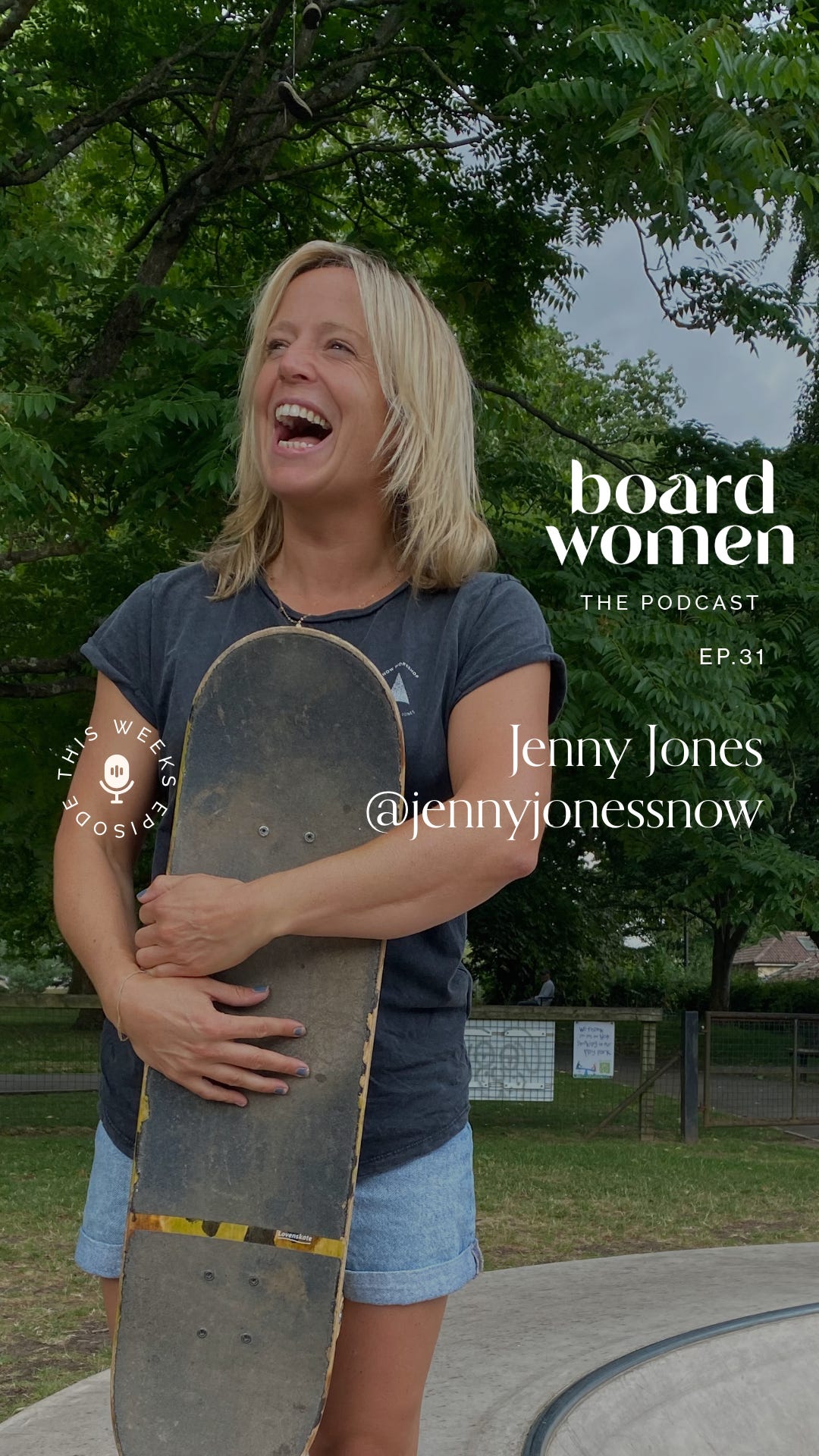
I’ve been so lucky in getting some fantastic guests on the podcast. Lucy Adams. Kimmy Fasani. Jenny Jones. And they were just as good as I’d hoped they would be, generous with their time, down to earth, phenomenally articulate women.
At times people have come on and I won’t lie that part of their appeal has been the size of their audience that they bring with them. I’m trying not to fall into that trap again, as without fail, those drivers have led to less interesting interviews, and less growth for the podcast. More fool me.
I chase the interesting stories where I can now, and don’t stress too much about whether the women are known or not, it’s the blend of both that works (and I constantly have a list of bigger names that straddle the fame/interesting story divide, it takes time).
Which leads me to..
(3) Lead with curiosity
You can get super analytical with your podcast (and I probably need to do this more). Understand whether you’re in the right categories. Understand what your name and description convey to people (my description 100% needs an update as we’ve evolved over time). Understand if your cover art brings people in. Are they staying beyond the first few minutes. Do they stay to the end of the episode. Are they coming from where you’re marketing the podcast and what’s working?
Get curious about all of it (especially if you then want to make money out of it, as you’ll need to be super familiar with the value you bring the brands you partner with).
However, the main curiosity I feel you need is curiosity in your own subject. Are you super interested in the person you’re interviewing? What is it in particular about their story that draws you in? What works specifically for your podcast and your audience? Rabbit holes of curiosity can only make the creative output more interesting, and most importantly, keep you interested too (see the top of this article about how to keep going..)
(4) Relationships are everything
I like my podcast to sound like I’m chatting with a friend. And I’m always aiming for a sub 1 hour (ideally 35-45 minutes) interview, because I’m targeting people like me, busy women who are listening on the fly, and much as they would love to have 2 hours to delve deep, their lives don’t really allow for it.
That means preparation is your best friend. I always have a decent pre interview chat with my guests to find out more about them, ensure they are at ease when it comes to the interview itself, but most importantly so that I can think of the angle about their story that works for this specific podcast.
And then I go and research. Yes I could probably outsource this part, but for me it’s the bit that makes the interviews work. I go deep on their background, what they’ve talked about in their social posts, the causes they believe in, the quotes they’ve given. You name it, I find it, and I work super hard to make sure we can deep on specific angles to make for an interesting interview.
All of this goes to show why it is SO frustrating if a guest then just doesn’t show up, which I had recently. So much of the work has been done at that point, as that work also guides the edit later, so the frustration is real. It’s only happened once, hopefully not again.
(5) Get ahead, get a plan
At the beginning I was most definitely winging it, learning on the fly, making mistake after mistake, but most importantly, I started. 50 episodes in, and there is finally some kind of rhythm to what I do.
It’s a fortnightly output, so I have a constant schedule of contacting new guests, setting up first chats, researching those guests, recording the interview, setting up the social quotes & creating reels, setting up the marketing of the episode etc. It’s a rhythm on social that I stick to pretty rigidly, and the processes are finally getting to the point where someone can take over part of them, and AI is starting to do its work when it comes to the admin part, leaving me to focus on the creative part.
There’s so much still to do to optimise the way I do it all, it’s a constant learning process, but my most important out-take is GET AHEAD. Record episodes ahead of time, have at least a few in your back pocket, get a cycle going so that you’re not waiting at the end for assets from someone that screws up your release cycle (yes, this happened multiple times. No, it won’t happen again).
It also means that when the rest of your life goes to pot (I’m a business owner and a mother of young kids, that’s what you sign up for), your passion business doesn’t too.
50 episodes, and 5 big learnings feel like it’s barely touching the sides
Just writing this has made me realise the learnings I’ve made over this period are rife, so if you do fancy a read of the top 50 things, let me know in the comments.
Maybe my biggest learning is taking a moment to celebrate the wins and how far I’ve come in that time. When you’re reading this I’ll hopefully have been for a (potentially rainy) surf, and be tee-ing up for our next London event, so I’ll be doing just that.
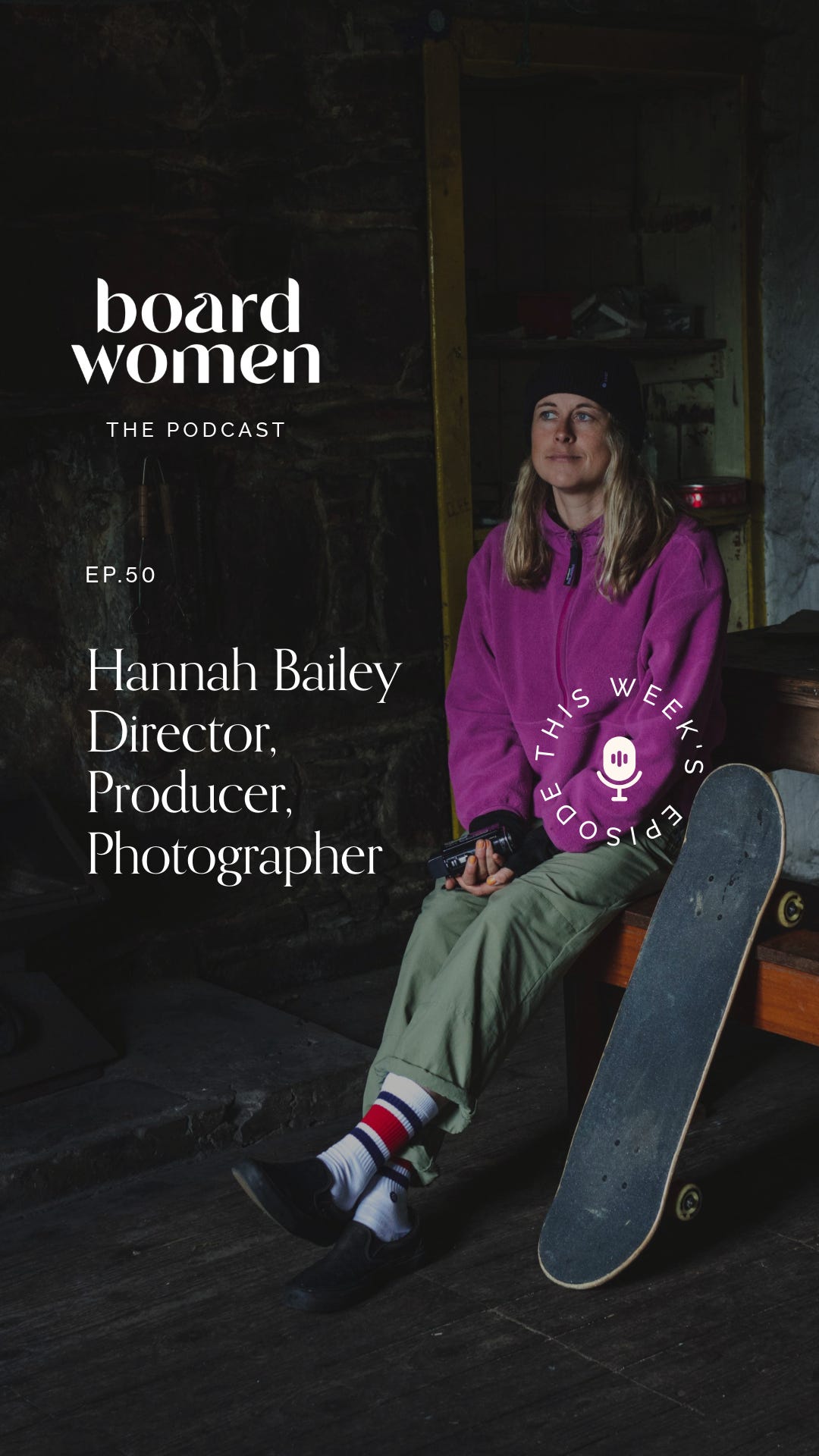
And to finish, a massive thank you to all of you who have taken the time to listen. And if you haven’t yet, what are you waiting for? Get yourself to spotify or apple or your favourite podcast platform, and wrap your ears around our last episode with the epic Hannah Bailey - writer, producer, photographer and all round inspiring creative who surfs, skates and snowboards. What’s not to like?
I really love what you’re doing. The podcast is a great listen, I like how it gives a glimpse into this awesome community and I find it inspiring to give more things a go. I hope the movement continues to grow and into other sports too.